28 Robert Hainsey60Grade
Hainsey provided functional play during his first year in Jacksonville, starting 15 games last season. He wins with quickness, awareness and timing more than size or power, getting into fits on schedule and offering some pop in the run game when working zone combinations or climbing to the second level. The limitations show up when he has to generate movement on his own, where he can get stalemated on base and angle-drive blocks with accessible edges late in the rep. In pass protection, Hainsey is alert and active with good hand placement, helping shore up the A-gaps when working with support. His sawed-off, narrow build limits his anchor, creating variance when isolated against power. Even so, his quickness, awareness and active hands give him enough functional value to hold up as a low-end starter.
27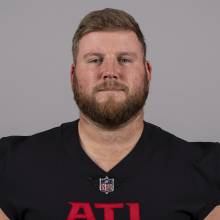 Ryan Neuzil60Grade
Neuzil gradually developed into Atlanta's starting center since arriving as a sawed-off undrafted free agent in 2022. He became a full-time starter for the first time in 2025 and didn't miss a snap. Neuzil lacks the mass and girth to command the point of attack when isolated against hulking nose tackles, and his anchor can get stressed when asked to shore up the A-gaps against late loopers or interior power. But he plays with enough snap, toughness and contact balance to pack a punch in the run game and provide help when uncovered in protection. Neuzil is an efficient combination blocker who is better at solidifying lanes than creating or maintaining them himself. Still, his awareness, timing and ability to keep the offense on schedule give him low-end starter value.
26 Danny Pinter61Grade
Pinter made one start at center in 2025 with another near-complete game, bringing him to 10 career starts since entering the league as a 2020 fifth-round draft pick. Pinter is a sawed-off, squatty center with fluid movement skills, good hand usage and enough sustain skill to keep blocks alive. His lack of mass and raw power can get him compressed when isolated against power down the middle of his frame, and he is vulnerable to getting picked by penetrators. But he does a very good job creating leverage with his hands, closing space and running his feet to stay attached. Pinter is not an overwhelming physical presence, but he maximizes his frame with technique, strain and quickness. Baltimore's zone-oriented scheme and lack of an established starter give him his clearest path to become a full-time contributor.
25 Ethan Pocic61Grade
Pocic now has 99 career starts after his most recent four-year stint with the Cleveland Browns, which ended after he sustained a season-ending Achilles tear. After getting medically cleared in July, the veteran snapper signed with the Ravens shortly thereafter. At 6'6", Pocic is a tall center with good length, solid play-strength and adequate athletic ability. His experience shows up in his quick processing skills and crafty, sound technique seen in his spacing, timing and ability to square up defenders on combination blocks. His below-average lateral quickness and tendency to drift against wide rush alignments lead to soft, accessible edges. In the run game, he lacks the power to uproot down linemen by himself but works well in unison on combos with the necessary sustain and steer skills to overtake effectively. Pocic's recent Achilles injury coupled with his age (31) create some questions about his burst and anchor being diminished. Even so, he should remain a functional starter inside Baltimore's familiar zone-oriented system.
24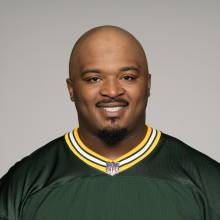 Elgton Jenkins61Grade
Jenkins signed with the Browns this offseason after starting nine games at center for the Green Bay Packers last season. A fractured fibula ended his campaign. His 2026 position remains unsettled, with center still a strong possibility. Jenkins projects better at guard, where the best stretches of his career have come and where his grade would likely be higher. At center last season, his movement skills looked diminished and he struggled to gain space off the line in pass protection, creating persistently soft edges. Jenkins still showed the stiff punch, instant clamp and play-strength to end reps quickly once latched, and his size/power can blot out defenders in the run game. However, the space limitations, recent injury and positional uncertainty cloud his 2026 projection.
23 Josh Myers62Grade
Myers put together the best season of pass-protection so far during his first year with the Jets, giving New York durable and functional play over the ball. Myers is a thickly built pivot with solid physical traits. The 27-year-old veteran even showed improved awareness against basic line games and stunts to provide steadier A-gap play than seen earlier in his career. He can still be fooled by simulated pressures and bite on setup moves when isolated, but his pass-protection baseline proved to be more stable. In the run game, Myers has enough burst and size to intersect, shield and wall off targets within the flow of the play. His robotic style and below-average body control still create shaky sustain late in reps, keeping him closer to a functional starter than a true difference-maker.
22 Jordan Meredith63Grade
Meredith started 11 games in 2025, primarily at center, with two starts at left guard in Weeks 10 and 11 before a season-ending ankle injury. Meredith is a sawed-off interior blocker with a stiff, jarring punch, solid play-strength and an attacking mentality. He plays low to the ground and can function as a sturdy point-of-attack blocker when defenders are within his frame. A lack of length and short-area quickness are limiting factors, though. His lack of reach shows up when isolated against hulking rushers, as it did against Quinnen Williams and Kenny Clark in Week 11 last year, while his middling range caps his ability to line up targets on the move. Meredith could survive as the fifth-best starter on a good line, with real value as a swing interior backup.
21 Luke Fortner64Grade
Fortner delivered a stabilizing performance after taking over for injured starter Erik McCoy as the New Orleans Saints' center in Week 8. He started the final 10 games and provided functional play. Fortner does not have a defining high-end trait, but he is an alert, assignment-sound center with enough quickness and processing to keep the offense on schedule. In the run game, he is best in zone concepts and combination work, where his initial fits, timing and ability to climb allow him to cover up targets and create functional angles. In pass protection, Fortner sorts line games, plugs gaps on time and helps keep the A-gaps contained. However, his lack of mass and play-strength limit his ability to consistently anchor or displace against higher-end interior defenders. He can survive within a rhythmic, quick-hitting system, but he is not a physically imposing presence who consistently changes the line of scrimmage. Fortner's rebound last season restored his value as a viable interior depth piece and spot starter capable of handling extended stretches at center without becoming a major liability.