29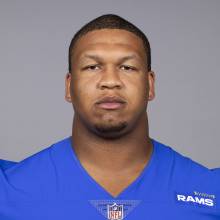 Alaric Jackson60Grade
Jackson established himself as a functional starter inside the Rams' ultra-friendly offensive structure, which limits true dropback exposure through heavy play-action usage and Matthew Stafford's quick trigger. Jackson is a wide, heavy-bodied and sawed-off tackle with below-average movement skills. Still, he has enough play-strength and craft to survive when the rep stays on his terms. In pass protection, he wins with a stiff punch to halt rushers, clamp into their frame and disrupt timing, especially off play-action or when mixing in changeups such as his vertical-to-jump set. Those tools mitigate his tendency to drift and float off his spot when threatened with speed, which can open a soft inside shoulder and leave him vulnerable across his face. In the run game, Jackson is sturdy enough to shore up lanes on doubles and down blocks, but his body control and space ability are limited. He can overextend or lose quickly on kickouts and second-level blocks when forced to navigate movement. Jackson's size, punch and play-strength give him functional starter value, though the movement limitations and reliance on environment keep the ceiling firmly capped.
28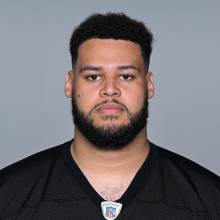 Dylan Cook61Grade
Cook saw his first extended NFL action in 2025 and filled in admirably after taking over as Pittsburgh's left tackle in Week 15. A former '22 undrafted free agent, Cook showed better pass-protection feel than expected, especially with his positional leverage, strike-timing and ability to use a snatch-trap technique for clean wins. He is sturdily built with solid movement skills and enough pop to create jolt when his hands land on time. Limitations show up more in the run game, where he can lean into contact, lose balance when the picture changes post-snap and get shed before sustaining. He did show value on combinations, overtakes and widening lanes once latched. Cook's five-start stretch gives him legitimate swing-tackle value, though the profile still reads more like a quality reserve than a stable starter.
27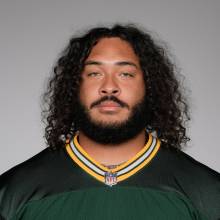 Jordan Morgan62Grade
Morgan started 12 games in 2025, primarily at right guard as part of a rotation, while also logging snaps at both tackle spots. That constant movement in and out of the lineup has slowed his development. Now, he is expected to get the first crack to start at left tackle in 2026 despite barely playing there through two NFL seasons. Morgan is a stoutly built blocker with heavy hands, good play-strength and a solid anchor when his hand placement and positional leverage are synced. He can root his feet and command the point of attack, but his rigid movement skills and below-average recovery leave him vulnerable when forced to redirect or work from compromised positions. There have also been scattered mental errors against delayed loopers, overloaded blitzes and exotic looks, though some of that likely stems from never settling at one spot. A full offseason at left tackle inside Green Bay's run-first, play-action structure gives him a better developmental runway, but the projection remains unsettled.
26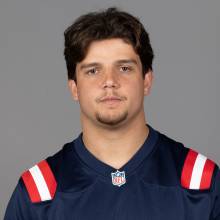 Will Campbell62Grade
Campbell settled in as a functional pass-protector and quality run-blocker as a rookie, with his best work coming before a Week 12 MCL sprain compromised his play-strength and movement skills. When healthy, his game is built on toughness, contact balance and enough athletic ability to execute in a run-oriented structure. He plays with a hard-nosed temperament and is at his best covering up defenders, fitting into blocks and creating movement through sustained strain rather than overwhelming displacement. His pass-protection ceiling remains the concern, though. Campbell's narrow frame gives rushers relatively clean access to his edges, making it harder for him to consistently protect half-man relationships or widen the arc without help. His profile can be managed with scheme guardrails, but it leaves him more functional than high-end when it comes to protection. His run-game reliability provides a starter-level floor, but the body-type and edge softness likely cap him closer to a middle-tier tackle unless his hand usage and set variation improve.
25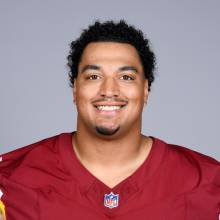 Brandon Coleman64Grade
Coleman started five games in 2025, opening the year at left guard before being benched after Week 2 due to persistent pass-protection issues. Eventually, he filled in for Laremy Tunsil with three starts at left tackle and sizable chunks of two other games. Coleman has looked much more comfortable at tackle dating back to his collegiate days. A lack of opportunity is the issue in Washington, with Tunsil entrenched and Coleman competing with Chris Paul for left guard reps. The TCU product is a wide-bodied blocker with very good mass, length and athletic ability, giving him the tools to weaponize his reach, establish first meaningful contact, stay attached once latched and create movement in the run game. He is currently miscast. Though Washington's under-center, play-action-centric structure could help him gain some level of comfort when working inside if guard remains his path toward gaining meaningful snaps.