24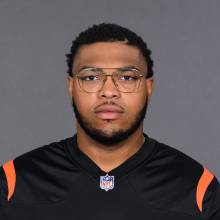 Orlando Brown Jr.66Grade
Brown rebounded in 2025 after a broken fibula limited him to 11 starts during the previous season, starting all 17 games and re-establishing himself as a durable, functional left tackle. Brown's game is built on size, length, snap-timing and veteran craft rather than range or recovery athleticism. In pass protection, he wins by staying square, protecting his inside shoulder and using his mass to create a long, difficult path through his frame. He does a good job establishing first meaningful contact, forcing rushers to work around his length and anchoring well enough to absorb power when his hands arrive on time. The limitations remain clear. Brown lacks high-end foot speed and range, which creates short corners and slower high-side losses against top rushers who can stress his edge. His run blocking is more about size, positioning and occupying space than consistent movement creation. Brown's profile is capped, but his length, mass, anchor and ability to lose slowly make him a solid low-variance starter when healthy.
23 Tyler Guyton67Grade
Guyton started 11 games as a rookie and 10 last season, with injuries keeping him out of practice and slowing much-needed developmental reps. Guyton entered the league as a one-year starter with high-end physical tools and a raw skill set, which remains largely where he sits entering Year 3. He has a prototypical frame, build and athletic ability. As a result, he displays good natural power, flashing as a twitched-up, physical blocker who can clear the pocket when uncovered, dent down linemen on double-team feeds and engulf rushers once latched. He has also started incorporating changeup sets, including three-step short, to disrupt rushers' timing. Though his posture, balance, footwork and hand usage remain volatile, especially against counters or post-snap movement in the run game. His ceiling remains considerable, but he needs sustained health and reps to refine his technique.
22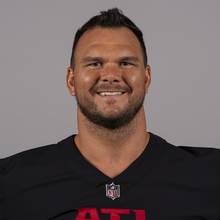 Jake Matthews68Grade
Matthews extended his remarkable consecutive-start streak to 196 games in 2025, remaining the NFL's premier ironman regardless of position. His value remains rooted in reliability, technical competence and a run-game profile that fits best in zone-heavy structures. Matthews is a sound zone-blocker with efficient footwork, clean positioning and enough strain to stay attached, steer and finish when he reaches his landmarks on time. In pass protection, he remains functional, but the anchor has become the clear limiting factor. Power-rushers can compress him into the pocket. The issue has been more exposed over the last two seasons as Atlanta moved away from the top-five play-action rates that previously helped reduce true dropback stress. Matthews can still survive with timing, angles and experience, but he is more dependent on structure than the higher-end left tackles. His durability and week-to-week steadiness carry value beyond what the trait scores fully capture, but the current profile is a reliable, system-sensitive starter rather than a high-end blindside protector.
21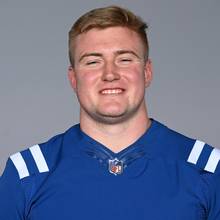 Bernhard Raimann69Grade
Raimann started 16 games in 2025 and remained a solid all-around left tackle, though his pass protection was not as clean as his '24 form. Raimann's game is built on movement skills, body control and strain. In the run game, he is a sticky blocker who can reach landmarks, wash down targets on backside cutoffs and overtakes, and intersect linebackers on climbs before steering defenders away from the ball once latched. In pass protection, his lighter, sawed-off frame still creates softer edges, and his snap timing and positional leverage were less consistent last season, leading to more short corners and oversets than he allowed at his best. He still has useful answers with his circle-punch and double-under technique, allowing him to create leverage, play longer than his frame suggests and keep rushers at his fingertips when his timing is right. Raimann's athleticism, toughness and sustain skills keep him in the dependable starter range, but the pass-protection variance and modest anchor cap him below the high-end left tackle tier.