10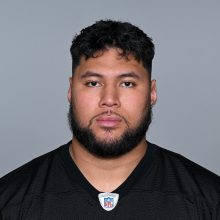 Troy Fautanu80Grade
Fautanu moved from left to right tackle as a rookie before a post-Week 1 knee injury ended his season, then returned in 2025 to start all 17 games, while establishing himself as one of the league's better young tackles. Fautanu is an explosive, aggressive blocker with good length, high-end movement skills and one of the league's best snatch-trap techniques, allowing him to steal leverage and knock rushers off their feet when they lean into him or are lazy with their hands. His attacking style creates some volatility, because he will take risks with heavy-handed strikes and early commitments. That same temperament is central to his impact. In pass protection, his quickness, recovery ability and strike-power keep him competitive even when timing is not perfect. In the run game, he is effective on both the front and backside, with the range to reach landmarks and the play personality to finish once attached. This fall, Fautanu is expected to move back to left tackle and accommodate first-round pick Max Iheanachor. His background on the blind side makes it reasonable to project a similar level of play. Regardless of side, Fautanu's explosiveness, leverage-stealing tools and competitive urgency make him difficult for defenders to attack with clean, repeatable plans.
9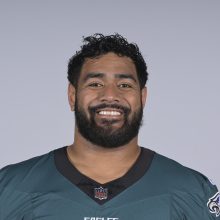 Jordan Mailata81Grade
Mailata remained a very good left tackle in 2025, but his play dipped slightly compared to his career-best '24 performance. Some of the downturn was tied to the Eagles' left side losing a bit of its usual force with Landon Dickerson playing through injuries. Mailata remains a rare mover at 6'8" and 360-plus pounds, with the mass, range and force to cave edges, displace the front side and cover space in Philadelphia's run-heavy structure. In pass protection, his size and improved patience allow him to engulf rushers when he stays square and gets his hands fit. Conversely, his low hand-carriage created more issues in 2025. Late hands exposed his chest, invited pocket compression and made it harder for him to control rushers before they built force through his frame. He can still be stressed by inside counters and late redirects, but his size, movement skill and play-strength give him a wide survival margin. Mailata remains a high-quality starter with rare run-game impact, though the pass-protection hand timing and slight year-over-year dip prevent him from joining the upper-tackle tier.
8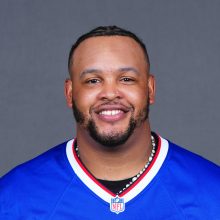 Dion Dawkins83Grade
Dawkins remains one of the league's more difficult left tackles to solve, because his pass-protection profile is both physically imposing and structurally uncommon. He has rare mass, excellent length and quick enough feet to survive on an island, but the separator is how he uses those tools to control the terms of the rush. Dawkins aligns with unusually wide splits that create space, isolate rushers and allow him to dictate the timing of first meaningful contact. Once latched, his grip strength and body control make reps difficult to restart. His snatch-trap package—the "Ice Pick," as he calls it—is one of the league's best answers against long-arm rushes, allowing him to protect his frame, punish forward lean and end reps quickly. Dawkins also brings clear run-game value as a mover, where his range, play-strength and finishing temperament show up as a puller and lead blocker. His game is not conventional, but it is refined and highly functional. He wins by expanding the edge, forcing rushers into predictable angles and closing reps with power.
7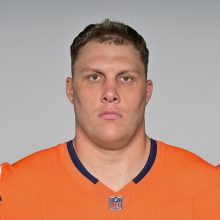 Garett Bolles84Grade
Bolles delivered the most consistent season of his career in 2025, starting every game for the third straight year and materially raising his pass-protection profile to one of the league's better blindside protectors. Bolles has always had the athletic ability, urgency and finishing temperament, but the current difference is the level of control in his hands and set mechanics. He routinely wins early with a high-low hand approach that captures the rusher's frame, protects his inside shoulder and forces speed-rushes to widen beyond the corner. His inside-hand strike remains a weapon for disrupting timing, but he is no longer as dependent on isolated flashes of aggression to survive. Bolles still benefits from Denver's offensive line-friendly structure under Sean Payton, but the improvement is real, as seen through cleaner leverage, fewer self-inflicted short corners and more consistent answers against counters. He is not an overpowering run-blocker, but his movement skills, competitive toughness and improved hand placement give him value across concepts. The result is a high-end left tackle whose game has aged into more precision without losing its edge.