39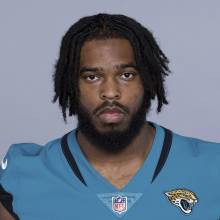 Bhayshul Tuten65Grade
Bhayshul Tuten had a limited sample size as a ball carrier during his rookie campaign. He showcased positive signs if he's ever given full-time starting opportunities. He runs with a low center of gravity and bounces off tackles like the ball in a pinball machine. Tuten is an explosive athlete with great straight-line speed in the open field. Again, the sample size was small, 83 carries and 10 receptions, but the signs are there. He should be battling for the RB1 spot heading into the 2026 NFL season.
38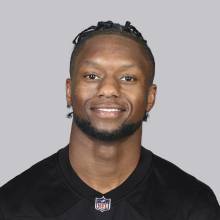 Joe Mixon65Grade
Joe Mixon was held out of the entire 2025 NFL season due to an undisclosed, complicated foot and ankle injury. In 2024, Mixon was great for the Houston Texans offense on the ground and through the air. He rushed for 1,016 yards with 309 yards receiving and 12 total touchdowns. He ran hard and with a good burst through the lane and into the open field. His pass-catching ability was an asset for CJ Stroud, both as a designated receiver and as a check-down option in the face of pressure. Accounting for over 1,300 yards from scrimmage isn't a walk in the park. The biggest issue for Mixon is when or if he'll be healthy for the 2026 season. He proved to be a solid starting running back, but the injury leaves his status in the air and brings his grade/ranking down significantly.
37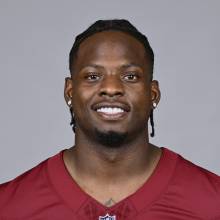 Brian Robinson Jr.65Grade
Brian Robinson put up a solid statistical season in 2025 as the RB2 behind Christian McCaffrey. He ran with patience through the line of scrimmage and followed blocks well. Robinson is a big, physical back who will run through a defender's face mask. He finishes runs and sets a tone offensively when he gets the ball. He is a quality backup who can step in as a starter if needed. Robinson is a great red zone back with his size, strength, and physicality. He's a solid player who should mesh well with Bijan Robinson in 2026 for the Atlanta Falcons.
36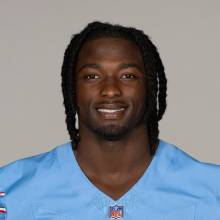 Tyjae Spears65Grade
Tyjae Spears is a quality backup running back with third-down value. He spells Tony Pollard and is a nice complement to his skill set. Spears is the more explosive and dynamic threat in space. He missed the first four games due to a high-ankle sprain that placed him on IR to start the season. Despite missing time, he finished third on the Titans with 45 receptions. Spears is a talented playmaker with good athletic traits to make an impact if given more touches. Right now, he's serving as a change-of-pace back and filling the role well.
35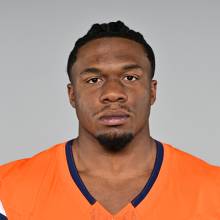 RJ Harvey65Grade
In Sean Payton's offense, RJ Harvey was an impactful rookie playmaker. He is a shifty, jitterbug-style runner who can shake defenders in a phone booth one-on-one. Harvey made his biggest contribution in the passing game. He was a reliable underneath target and used to defeat heavy blitz calls. He knifes through the first layers of the defense because of his vision, short-area quickness, and patience. Harvey is an undersized running back, and it shows up when he is asked to protect Bo Nix. He does not have the power to stonewall defenders without cutting them at the knees. He's a good number-two, change-of-pace running back, but unlikely to be a long-term starter.
34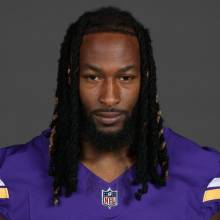 Aaron Jones65Grade
Aaron Jones is a savvy veteran running back. He has great vision and patience as a runner with smooth footwork to change directions. Jones is an impactful receiver out of the backfield. He has strong hands and looks the ball in before making his next move. His 2025 season was limited to 12 games due to a hamstring injury, suffered in week two. His production took a step back from his 1,500 yards from scrimmage in 2024. Jones is not an elite running back, but he's more than capable of having a positive impact on the offense when he's on the field.
33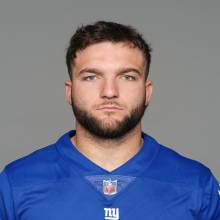 Cam Skattebo66Grade
Cam Skattebo's rookie season was limited to eight games due to a right ankle dislocation, an open tibia fracture, and a ruptured deltoid ligament. Before the injury, Skattebo brought a physical and tone-setting presence to the Giants' offense. He is a fearless competitor who seeks out contact and embraces it. Skattebo runs through the defenders like Juggernaut runs through walls, headfirst and with no regrets. He was steady in pass protection and caught the ball well out of the backfield. Skattebo is an average athlete who lacks the third gear to pull away from the defense. Also, he is not an elusive runner with quick lateral agility. He relies on running through defenders' faces, which is a difficult way to win in the NFL over the long term.
32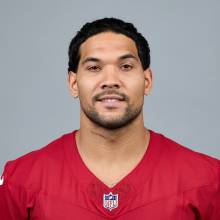 James Conner66Grade
James Conner suffered a season-ending foot and ankle injury in week 3 of last season. He was coming off another strong season, rushing over 1,000 yards in 2024. Before the injury, Conner was averaging a pedestrian three yards per carry with a rush EPA of -3.9. His game thrives off patience and vision to find running lanes by the offensive line. Conner isn't going to create much for himself in the backfield and can be limited by less-than-stellar blocking up front. He is a functional pass catcher, accounting for 414 yards in 2024. It appeared before the injury that he wouldn't have an equally strong performance last season. Conner may be entering the decline of his productive, high-quality NFL career as a starter.
31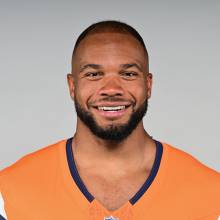 JK Dobbins66Grade
J.K. Dobbins showcased over the last two seasons; he remains a quality starting running back and contributor. He's rushed for 905 yards in 2024 and 772 in 2025. Unfortunately, both seasons were cut short by injuries. Dobbins has played in 23 of the available 34 games since 2024. As a runner, he is patient and disciplined, effectively running between the tackles and outside. He runs behind his pads with strength and contact balance when meeting defenders in the alley. Dobbins' missing games are almost a foregone conclusion, which is unfortunate because he's a good player.
30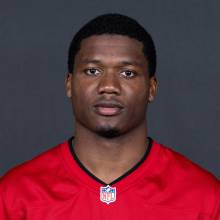 Bucky Irving66Grade
Coming off a breakout rookie season in 2024, Bucky Irving started his sophomore season on the right foot. He sustained shoulder and foot injuries in week four against the Eagles. He did not return to the lineup until Week 13 against the Cardinals. His touchdowns significantly dropped from eight to one last season. When healthy, he is an impactful player for the Bucs' offense. He plays with surprising body control and contact balance. He has a high motor and keeps his legs churning for extra yards. Irving's vision and patience are keys to his success as a ball carrier. He finds running lanes and executes cutbacks well. After off-season surgery, hopes are that Irving returns to his healthy 2024 form.
29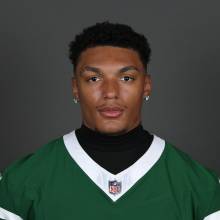 Braelon Allen67Grade
Braelon Allen played only four games last season due to a left knee MCL sprain, which led to season-ending surgery. When healthy, he is a big, strong one-cut runner who excels once he gets downhill, north-south. He adds a "rumbling thunder" element to the rushing attack. Allen has solid foot quickness and lateral agility to sidestep defenders and move patiently through the second level of the defense. He hasn't proven to be more than a functional running back, and his pass protection still needs improvement. Allen is a viable backup to change the pace whenever Breece Hall needs a breather.
28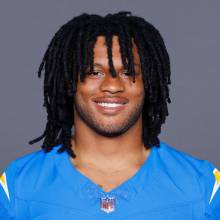 Omarion Hampton67Grade
Omarion Hampton was battle-tested in his rookie season. He got off to a slow start before finding his footing in Week 3. As Hampton began to produce as the lead back, he suffered a fractured ankle in week five against the Washington Commanders. He was sidelined until Week 14. The Chargers' rookie missed a good chunk of the season, which slowed development and acclimation to the speed of the NFL game. In his 124 carries, Hampton showcased his speed, acceleration, and outstanding run power. He is a physical, powerful finisher on contact, difficult to bring down with his forward momentum. His contact balance is great, and he is a functional receiver with good hands in space. He needs more reps as a pass protector to hone in on his technique.
27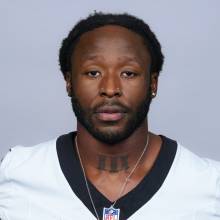 Alvin Kamara67Grade
Alvin Kamara is an established dual-threat running back. He started 11 straight games for the Saints before an MCL sprain and ankle injury in Week 12 against the Atlanta Falcons forced him out of action for the remainder of the season. Before the injuries, Kamara was solid, but he clearly appeared to have lost a step athletically. He runs with great vision and elusiveness/slashes in and out of traffic. He remains one of the best at following his blocks to daylight. He finished the season with the worst yards-per-carry of his career, at 3.6, and didn't have the same impact as a pass catcher either. Kamara's pass protection left a lot to be desired. All in all, he remains a capable playmaker in an NFL offense.
26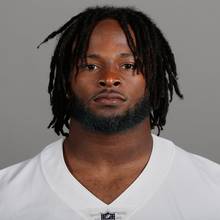 Javonte Williams68Grade
Javonte Williams is a downhill hammer and physical running back. He becomes a bowling ball with momentum when he attacks north and south. Williams runs through tackles and excels after initial contact. He averaged 3.9 yards after contact per carry, per NFL Next Gen Stats. Williams is a functional, at-best, checkdown option in the passing attack. He's an ok pass protector who gives full effort. He is not a high upside back, but he fills the functional starting role admirably.
25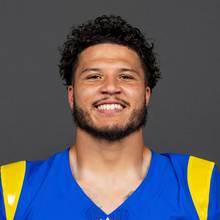 Blake Corum69Grade
Blake Corum is the primary backup running back for the Rams. He has been impressive with his limited workload, rushing for 746 yards and six touchdowns. Corum runs with immense patience and balance between the tackles. His short-area quickness and burst bring a different element to the backfield. Corum has a whopping +13.3 Rush EPA, showcasing his effectiveness in the backfield.
24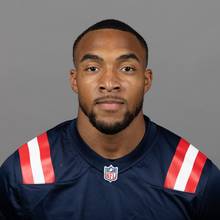 TreVeyon Henderson69Grade
TreVeyon Henderson is an explosive playmaking running back for the New England Patriots. In his rookie season, he accounted for 1,132 yards and 10 touchdowns from scrimmage. Henderson is a patient runner with good vision and is adept at following his blocks to daylight. Paired with explosive burst and top-end open-field speed, he's a big play waiting to happen. Henderson's feet are quiet like a mouse, but his acceleration booms like a stick of dynamite. He must improve his pass protection by providing a stronger anchor at the point of attack. There's a bright future for the soon-to-be second-year runner.
23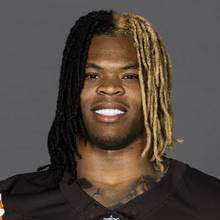 Quinshon Judkins69Grade
Quinshon Judkins was a lone bright spot for the Cleveland Browns offense in 2025. The second-round draft pick rushed for over 800 yards with seven touchdowns. He displayed great strength and balance. Judkins' game is built on vision and patience to set up blocks and attack quickly, working downhill. He was a reliable checkdown option in the Browns' passing offense by reaching his landmarks quickly. He gave the Browns' offense an identity to lean on. Judkins' pass protection was inconsistent, choosing to cut off free runners rather than standing tall and meeting them at the point of attack. Unfortunately, Judkins suffered a season-ending injury in Week 16 versus the Buffalo Bills. He dislocated his ankle and fractured a fibula. He was closing in on a potential 1,000-yard rushing season to begin his career before the injury disrupted it.