27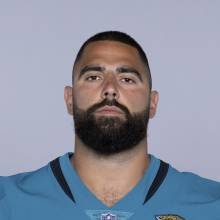 Patrick Mekari60Grade
Mekari started 14 games in his first season in Jacksonville despite concussion and back issues, once again showing the versatility that has defined his career. He is more useful than impactful as a crafty, hard-nosed lineman with enough athletic ability, leverage understanding and hand activity to make defenders work. His experience across the line gives him roster value, but he functions best in a run-first scheme that limits true dropback exposure. Mekari is sawed off with a shaky anchor, shrinking his margin for error with strike-timing and placement, leading to clean losses across his face when his hands are late or off target. He can spot start across multiple positions, though. Still, the lack of power and down-to-down stability keep him below dependable starter level.
26 Cole Strange61Grade
Strange entered the lineup in Week 4 and brought stability over 14 starts, putting together the best season of an otherwise disappointing career. His value is rooted in quickness, body control and scheme fit, with the movement skills to reach, cut off the backside, climb to backers and function as a puller in a zone-heavy run game. In pass protection, Strange leans on jump-sets to eliminate rushers' runway and help offset below-average play-strength, while staying alert when uncovered to provide a thump on adjacent rushers. He remains scheme-dependent, though. Head-up power can stalemate or compress him, and his anchor is not sturdy enough to consistently survive without structure. Following Mike McDaniel from the Miami Dolphins to the Chargers gives him a realistic path to maintaining the recently established functional level.
25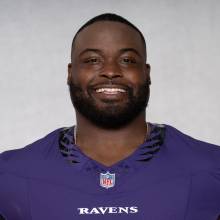 John Simpson61Grade
Simpson remained a durable, physical presence in 2025, extending his run of consecutive 17-start seasons while bringing his usual size, length and tone-setting demeanor to the interior. At 6'4" and 330 pounds with long arms and heavy hands, Simpson can cover up defenders, create jolt on contact and deliver forceful body blows when uncovered or working downhill. Once latched, he is difficult to work through and has enough raw mass and power to tilt the line of scrimmage. However, his game remains more physical than controlled. Simpson's below-average body-control, balance and sustain skills lead to slipping off too many blocks late in the process, especially when defenders force him to adjust in space or work across his face. In pass protection, he can hold up when square and connected, but his mirroring limitations and recovery range leave him vulnerable when isolated against quickness. Simpson's durability, size and demeanor give him functional value as a tone-setting guard in the right structure, but the lack of polish and inconsistent control keep him closer to a low-end option than a dependable every-down answer.
24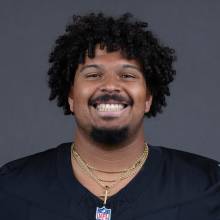 Caleb Rogers62Grade
Rogers entered the Raiders' lineup in Week 13 and started the final six games, putting enough tape together to compete for the full-time job in Klint Kubiak's system. The 2025 third-round draft pick is a sawed-off, sturdy guard with solid play-strength, good power, above-average movement skills and a fiery, physical demeanor. Those traits showed up through a jarring punch, pocket-clearing force when uncovered, the burst to uproot down linemen and enough range to intersect targets on the move. The second-year blocker must refine his technique, though. Raw footwork and rigid hand usage limited his ability to adapt and recover when isolated in protection, while leading to overextension and shaky balance on base and angle-drive blocks. Rogers' physicality, traits and improved ecosystem give him a viable path to earning a starting job, but his technique must stabilize.
23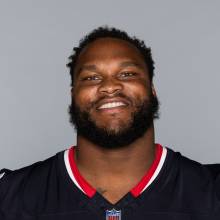 Ed Ingram62Grade
Ingram showed more consistency last season, offering some validation for his second-round pedigree while still carrying a volatile profile. His value is rooted in linear explosiveness, heavy hands and enough play-strength to create displacement when he can work vertically or strike uncovered defenders in pass protection. Ingram can generate movement in the run game when his aiming points are clean. His raw power provides a physical presence that stands out in flashes. Unfortunately, his game remains more forceful than controlled. In pass protection, he remains vulnerable in true one-on-one situations against high-end interior rushers, where his heavy-handed approach can backfire if his timing or placement is off. His feet can stall late in reps, leaving him susceptible to being slipped cleanly by refined counters. Ingram has enough size, power and physical upside to compete for a starting role, but the pass-protection variance and inconsistent control make him better suited as the fifth starter on a stable line.
22 Anthony Bradford63Grade
Bradford started every game this past season and became more functional inside Klint Kubiak's run-first, play-action-heavy system—which helped quiet some of the high-variance play from earlier in his career. Bradford wins with mass, density and some of the league's heaviest hands, allowing him to root down, hold ground and jar defenders when his timing is right. His power shows up when passing off penetrators, finding uncoveraged work, feeding down linemen on doubles and covering up defenders in the post. He also showed a firmer inside hand in pass protection, reducing some of the quick losses across his face. The volatility remains, though. Bradford's choppy footwork and tendency to bite on setup moves create short corners and isolated losses. His 2025 tape was more functional than clean, with Kubiak's structure doing a good job allowing his power to shine while masking some of the movement and hand-timing issues.