 The top experienced right tackles in pro football, graded and ranked by the B/R Scouting Department. Rookies to be graded separately.Player photos: AP Images
32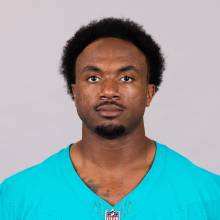 Austin Jackson51Grade
Jackson started just 14 games over the last two seasons due to lower-body injuries, including a torn meniscus in 2024 and toe injury in '25 that led Miami to restructure his deal into a one-year, prove-it arrangement. When available last season, Jackson remained volatile. He has enough size, heavy hands and initial power to jolt rushers or create first-level movement when his timing is right, but shaky body control and erratic hand usage routinely pull him out of position. He overcommits to defenders' initial paths, struggles to adjust as reps progress and lacks the recovery skill to save himself once beaten. Jackson's experience keeps him rosterable, but his recent availability and technical inconsistency place him closer to the backup tier than a dependable starting option.
31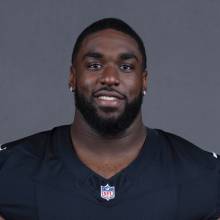 DJ Glaze51Grade
Glaze played every snap in 2025 inside a subpar Raiders environment, where a lethargic run game and frequent obvious passing situations lowered the floor of the entire offensive line. Glaze was particularly exposed in protection, where below-average movement and redirect skills led to too many glaring losses against higher-end rushers. He's a big-bodied, thick tackle with solid play-strength and flashes of halting power, but erratic pad level and strike-timing expose his chest, sap his leverage and create shaky body control. In the run game, Glaze has the dimensions and raw strength to cover up targets and create displacement in spurts, though his technique remains unrefined. His 2025 tape was mediocre. However, a more stable, offensive line-friendly structure under head coach Klint Kubiak offers some room for improved functionality this fall.
30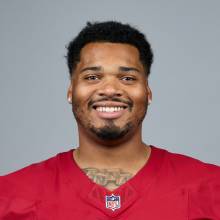 Elijah Wilkinson53Grade
Wilkinson started every game in 2025 for the first time in his nine-year career after the Atlanta Falcons lost their top two right tackles before the season began. That availability helped earn him a two-year deal with Arizona, where he enters 2026 as the presumed starter. Wilkinson is a wide-bodied, thick tackle with good length and enough run-game utility to function in a zone-heavy structure. He's at his best firing off the ball, getting on track and overrunning targets within the flow of the play. Pass protection is the problem. Wilkinson struggles to redirect, recover and shore up movement across his face, leading to too many clean losses when isolated. His size and run-game fit give him spot-starter value, but the pass-protection leakage makes him best suited for a protected role inside a play-action-based system.
29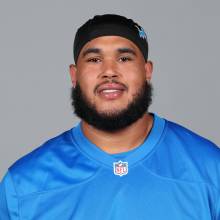 Larry Borom56Grade
Borom started a career-high 11 games in 2025 during his lone season in Miami and functioned as a serviceable right tackle inside Mike McDaniel's quick-hitting passing game. Borom is a wide-bodied blocker with enough mass and anchor to survive when protected by structure and schemed help. In the run game, he can shield defenders on angle-drive blocks, but he lacks consistent displacement, hand-control and sustain. His below-average redirect skills leave little margin for error, and rushers can progressively access his edges as reps extend. Borom profiles best as a swing tackle or spot starter who can survive in a quick-game, help-oriented environment.
28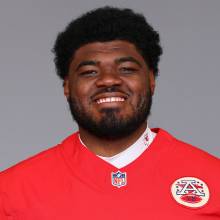 Jaylon Moore56Grade
Moore started six games during his first season in Kansas City, seeing time at both tackle spots and serving as a sixth offensive lineman in heavy formations. Moore is a controlled, assignment-sound blocker, who generally arrives at landmarks on time and can shield defenders within the flow of the play. Those traits help offset below-average power and movement skills, which show up on solo drive/base blocks and inconsistent second-level sustain. In pass protection, he is best with schemed help that funnels rushers into his large hands and solid placement, allowing him to latch and force counters. Without help on obvious passing downs, his limited range and anchor create more volatility. Moore profiles best as a swing tackle rather than a dependable starter.
27 Warren McClendon Jr.59Grade
McClendon started 10 games at right tackle last season for the injured Rob Havenstein and provided functional play inside the Rams' play-action-heavy, offensive line-friendly structure. Matthew Stafford's 2.73-second average time to throw helped mitigate the 25-year-old's below-average athletic ability and range. McClendon has a sturdy build, good length and enough play-strength to keep the offense on schedule. In pass protection, he plays centered with a high outside/low inside hand carriage to clamp high-side rushes, anchor against power and disrupt slower-developing moves. Issues appear when isolated against higher-end rushers, where limited range and dropping his outside foot can open him to clean inside counters. In the run game, McClendon plays firm, covers up targets and maintains balance well enough to occupy defenders. His brief left tackle work in 2024 was shaky, but his '25 film provides a path toward being a functional starter after Havenstein's retirement.