23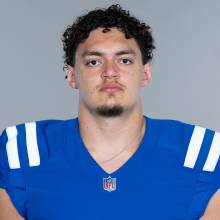 Jalen Travis66Grade
Travis finished his rookie season with four late starts between both tackle spots, playing well enough for Indianapolis to move forward with him as its full-time right tackle entering 2026. Travis is a tall, broad-framed and densely built tackle with very good length, a stiff punch and a sturdy anchor. In pass protection, he casts a wide net and is difficult to work through cleanly. But high-end edge speed can stress his range, causing him to float off his spot, let his pads rise and become vulnerable to speed-to-power counters that work inside and underneath him. In the run game, Travis can cave defenders on double-team feeds, cover up ends on kick-outs and lead around the edge to open perimeter lanes. Sudden movement across his face can still expose his high-cut frame and tardy redirect skills, but his size, power and early functionality give him a viable starter pathway if his set discipline and hand usage stabilize.
22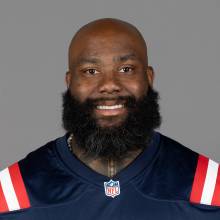 Morgan Moses66Grade
Moses completed his 12th season with 21 total starts, further cementing his status as one of the league's true ironmen. After a rough opening stretch, likely influenced by a Week 2 ankle injury, he settled near his usual baseline. Moses is a massive, wide-bodied tackle with premier length and a veteran understanding of how to weaponize it, using timing and hand-placement to establish first meaningful contact and keep rushers off his frame. Those skills help offset below-average movement skills that have become more exposed with age, especially when his pass-protection volume rises. Wide alignments can stress his range, cause him to lean at the top of the pocket and leave him vulnerable across his face late in reps. Moses still brings a sturdy anchor, functional run-game power and meaningful leadership value, but the declining recovery range keeps him in the capped-starter tier.
21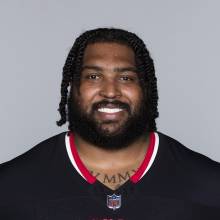 Tytus Howard66Grade
Howard was traded to Cleveland this offseason and signed an extension to man right tackle as part of the Browns' offensive line reset. He pieced together one of his better seasons last year, primarily at right tackle while also logging starts at both guard spots. Howard is a big-bodied, long blocker with heavy hands. Improved body control and hand usage helped him better collect movement across his face and transition into his anchor. He remains a below-average lateral mover with lower-half stiffness that caps his redirect and recovery skills. In the run game, his size and power allow him to cover up and move defenders on angle-drive blocks and double-teams. When his urgency level is high—as it was in 2025 and similarly in his '22 contract year—Howard can beat defenders to the spot, strike first and play closer to solid than below-average, while his guard/tackle flexibility provides Cleveland insurance along a rebuilt front.
20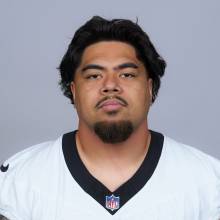 Taliese Fuaga67Grade
Fuaga started 13 games in 2025 while battling knee, back and high-ankle injuries. Still, the core appeal of his game remained obvious with his play-strength, power and a heavy-handed presence at the point of attack. Fuaga is at his best when he can square defenders, initiate first meaningful contact and use his thick build and stiff punch to dictate terms early in the rep. That approach gives him a sturdy floor against power and allows him to create movement in the run game when his landmarks are clean. Issues stem from his pass-protection margin remaining narrow. Fuaga has mediocre range, body control and recovery skill, which leads to quick losses when rushers prevent him from landing first or force him into late adjustments. He experimented with changeups, including vertical-to-jump sets, to disrupt rush timing, and those answers helped at times, but they also left him vulnerable to decisive wins across his face. In the run game, Fuaga has real knockback power and second-level finishing ability, but his middling adjustability shows up against movement across his face. His power profile gives him starter-level value, but reaching a higher tier will require cleaner hand-timing, better set discipline and a scheme that lets him play forward more than it exposes him in space.
19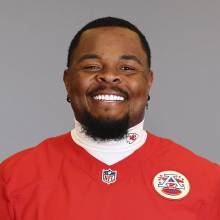 Jawaan Taylor67Grade
Taylor finished his seventh season overall and third with Kansas City in 2025, starting 12 games before a triceps injury sidelined him for the final five. After reducing his penalty totals each year with the Chiefs, Taylor signed with the Falcons on a modest one-year deal that could provide real value if the cleaner discipline holds. His false-start issues are tied to the rigidity of his game, with Taylor often trying to steal the early runway needed for his size, length and play-strength to take over. Taylor remains a functional starting right tackle with prototypical size, length and enough play-strength to neutralize most rushers when he stays square. His pass sets are built on short, choppy steps that help him stay inside-out to his landmarks, followed by a two-hand strike designed to initiate contact and engulf rushers before they can access his edges. The limitations show up against slippery, high-end athletes who can evade his initial punch, force him to redirect and create quick edge losses. In the run game, Taylor can fit, cover up and wall off targets, but high pads and occasional understeps limit his sustain, finish and ability to adjust late in reps. He has learned to maximize his size and length in pass protection, but the movement ceiling and run-game limitations keep him in the functional starter tier.
18 Mike McGlinchey67Grade
McGlinchey started all 17 games last season and delivered another solid season, largely matching the level he has played at since arriving from San Francisco in 2023. McGlinchey is a tall, experienced right tackle with solid burst, good run-game feel and a clear understanding of timing, angles and concept intent. He is effective as a lead blocker around the edge, efficient on combinations and capable of cutting off the backside when his landmarks are clean. In pass protection, he can settle at his spot, stay inside-out and protect his inside shoulder, while using a circle-punch and two-hand strike to create early leverage inside rushers' frames. The tradeoff is a rigid, somewhat robotic style that works best when his snap-timing is clean and he can beat rushers to the spot. When that timing is disrupted, the margin narrows quickly. Rushers can freeze his feet, shorten the corner or compress him with speed-to-power. McGlinchey remains a functional starting right tackle because of his run-game intelligence, experience and ability to end reps quickly against most competition. However, his pass-protection ceiling is capped by limited pliability, recovery range and anchor consistency.
17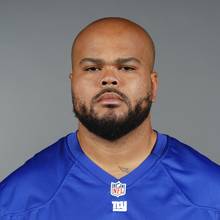 Jermaine Eluemunor68Grade
Eluemunor trended toward greater stability over the last two seasons with the Giants, including 16 starts in 2025, and profiles as a functional short-term answer at right tackle. His value stems from size, width and composure in pass protection. Eluemunor plays with a square posture, gains adequate depth on vertical sets and does a solid job forcing rushers to work through his frame rather than giving up immediate access to his edges. The Giants also helped manage his exposure against top rushers with chips and tight-end help on many true dropbacks, reducing the number of clean island reps he needed to survive. That structure helps mask below-average late-rep recovery, but a limited ceiling is clear when facing higher-end rushers who can stress his twitch, force him into recovery mode or string moves together. In the run game, Eluemunor can generate movement on contact and cover up defenders with his frame, but he does not consistently sustain, steer or finish deep into reps. He is not a high-upside tackle, though his size, experience and ability to keep most reps orderly make him a steady, low-variance starter.
16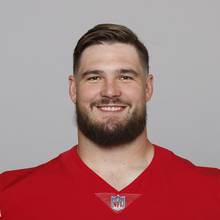 Colton McKivitz68Grade
McKivitz built upon his late 2024 improvement with the most consistent season of his career last year, settling in as a functional right tackle for the 49ers. His game is rooted in efficiency, positioning and hand usage more than standout physical traits. McKivitz is broadly built with solid play-strength and enough short-area quickness to reach run-game landmarks on time, create quick leverage and stay on schedule as a positional blocker. That same efficiency translates to pass protection against tighter alignments or when San Francisco uses help to funnel wider rushers back into his grasp. His range to expand set points against wide alignments is only adequate, leaving him stressed by high-side rushes when he cannot win early with his hands. Late inside counters can also challenge his posture and balance near the top of the pocket. McKivitz is not a high-ceiling tackle, but his technical growth, independent hands and fit within the Niners' structure have made him a useful homegrown starter.
15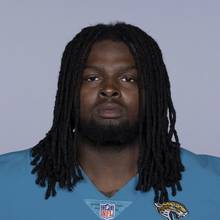 Anton Harrison69Grade
Harrison started 15 games last season and remained a mixed profile, with high-end flashes, glaring losses and enough steady stretches to land as a middle-of-the-pack starter with remaining growth potential. Harrison has good size, raw strength and athletic ability to match up physically with most edge-rushers, and his pass-protection tape shows flashes of real answers, including Hamilton technique to unlock long-arms and jarring strike-power when his hands land cleanly. A lack of consistency remains problematic. High hands, tardy anchor-timing and stepping under himself against high-side rushes can shorten the corner and lead to quick compression. In the run game, Harrison shows power on kick-outs and feeds with useful range leading around the edge, but backside zone work can get leaky when he crosses over on cutoffs and overtakes. He just turned 24 earlier this year, and the tools suggest a higher ceiling if his technique stabilizes.
14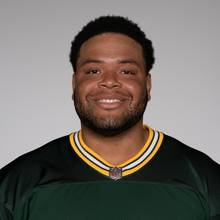 Zach Bako-Bewele69Grade
Bako-Bewele started 12 games in 2025 before a partially torn patellar tendon ended his season in Week 15 and required offseason surgery, interrupting what had been a steady two-year run as Green Bay's starting right tackle. Bako-Bewele remains a loose, fluid mover whose value is rooted in quickness, timing and fit inside the Packers' offensive line-friendly structure. He reaches landmarks on schedule, plays with good leverage and has the range to cover space in the run game on combinations, climbs and cutoffs. In pass protection, Bako-Bewele can get to his spots quickly and protect the corner against speed when the rhythm of the rep stays clean, but his profile is still capped by middling play-strength. Green Bay's condensed formations, tight-end alignments, chips and play-action-oriented structure also helped manage his exposure, reducing the number of true island reps where his anchor and play-strength limitations were most likely to show up. Power-rushers can compress his anchor. Furthermore, his smaller frame gives defenders more access to work through him or capture edges when his hands and base are not perfectly synced. Bako-Bewele is a useful, athletic right tackle in the right structure, but the injury and persistent strength concerns keep him closer to the functional starter tier than the high-end group he once chased.