68 Luke Schoonmaker60Grade
It hasn't been a smooth career for Luke Schoonmaker, and sometimes that happens when players get drafted based on traits. The flashes of athleticism, ball skills, and yards after the catch are still there every now and then, but for a player who looked like he'd be a valuable blocker at the next level, he's gone the other way. The former Wolverine doesn't sustain blocks, overruns his targets, and gets manhandled at the point of attack. Schoonmaker hasn't developed as a receiver, and while technically the second tight end to Jake Ferguson last season, his job isn't guaranteed.
67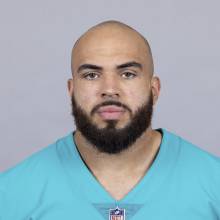 Julian Hill61Grade
Being utilized in Mike McDaniel's offense requires many elements and the tools to execute several tasks. Julian Hill is a better in-line blocker than on the move; he struggles to line up blocks when lead blocking and consistently overruns his targets. But he's a high-effort blocker who can double to the second level and add value as a pass protector. Hill proved to be a tough player after the catch, lowering his shoulder and bouncing off tackles a number of times last season. He'll look to make the transition to New England and help any way he can.
66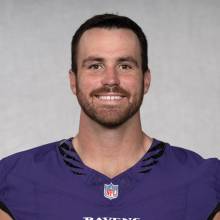 Durham Smythe62Grade
Durham Smythe is the third tight end every offense wants. He's a reliable pass catcher, but he's there to do one thing in a lot of ways. Block. Whether that's in line, on the move, or from the backfield, he'll help clear lanes for the running backs and will help the offensive line in pass protection, too. He helped open some impressive holes against the Rams in the Divisional round of the playoffs last year, and he'll be attempting to do the same for Derrick Henry and the Ravens in the fall.
65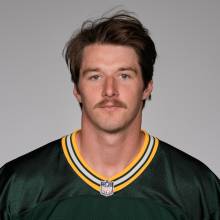 Luke Musgrave62Grade
Luke Musgrave has legit seam-busting speed and can put safeties on their heels when he attacks them downfield. He runs inside-out routes with purpose and head usage, but lacks the refinement as a route-runner to uncover against man coverage elsewhere. For all the athletic ability he has, finding yards after the catch is tougher for him, and he struggles with contact through the route and at the catch point. Musgrave is a poor blocker, and the Packers were forced to use him a bit more in that regard after the Kraft injury. Musgrave will need to improve his concentration and the fluidity of his yards-after-catch, but he meshes well with Kraft as a receiving option when they are on the field together.
64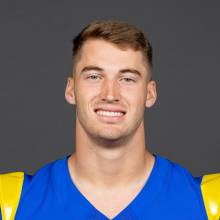 Davis Allen63Grade
No one is safe with Sean McVay running the show; if you're a tight end in that room, you will PLAY. Davis Allen was the one tight end on the field every time the Rams ran plays with a 13-personnel grouping, and while he was used in the passing game, he had one job: block. He's an above-average run blocker who does a good job angling his body to create rushing lanes for their running backs, inserting to the next level, and finding ways to get the job done. He's not an overly dynamic playmaker, but he is a big part of the tight end wave in LA. Allen will get outleveraged at times, but he always brings the effort, and that's why McVay wants him around.
63 Elijah Arroyo63Grade
Seattle did their best to weaponize Elijah Arroyo on the move in multiple ways, which helped them get the most out of his blocking as a rookie. The effort was there for him, and going up against defensive backs and some second-level defenders was better for him, but the technique and functional strength are lacking. Arroyo has some work to do with route running and locating soft spots in zone, but his speed and ability to drift into space post-route can help the Seahawks stretch the field. There's some real receiving talent in the former second-round pick, and if he takes a step in 2026, the Seahawks tight end room will look formidable.
62 Drew Sample63Grade
The Bengals' tight end room is full of guys who aren't useful blockers, so that job fell to Drew Sample. Often used as an extra pair of hands in pass protection as well, Sample provides a useful, multi-faceted blocker who can play in-line, on the move, or out of the backfield. He plays with good initial power and technique, giving running backs lanes early on, and creates walls at the next level. Sample isn't a needle-mover as a receiving option, but proved to be a safe checkdown option when targeted. He remains the only proven blocker in a suddenly crowded tight end room.
61 Greg Dulcich64Grade
The total stats don't show it, but Greg Dulcich just had his best season in the NFL and earned a role for the Dolphins in 2026. After dealing with tons of injuries early in his career with the Broncos, the former third-round pick stayed healthy and was signed off the street before Week 8. He averaged 2.31 yards per route run (PFF), averaged 12.9 yards per target, and had the best catch percentage (78.8%, via NFLPro) of his career. Dulcich looked more like his UCLA self, an aggressive route-runner who could catch anything thrown his way and get upfield quickly after the catch. He's not going to bring much as a blocker, but his receiving upside looks to be back.
60 Luke Farrell64Grade
Luke Farrell has to do a lot of the dirty work for the 49ers offense, and he's happy to do it. From pass blocking to lead blocking on an outside pitch, he executes a number of different blocks and is the "blocking" tight end on the roster, not named Kittle. He shows great timing on double teams, takes smart angles to the second level or on pulls to give the back a lane to run, and holds his own in one-on-ones. Farrell is a reliable checkdown option with solid hands, but not much more in the passing game.
59 Mike Gesicki64Grade
Playing tight end typically means you'll have to do a good amount of blocking, even if the term "big slot" is thrown around, unless your name is Mike Gesicki. He was on the field for 53 rushing plays last season, and rarely blocked anyone. The Bengals don't ask him to block, and he doesn't want to. Gesicki's value is as a receiver and the mismatch body type he represents, particularly over the middle of the field. With a pectoral injury thrown in last season, he missed some time and posted his three touchdowns after his return. If Gesicki is on the field, it's to catch footballs, and that's it.
58 Terrance Ferguson64Grade
With as many tight ends on the field as the Rams had last season, someone had to be the explosive presence. Terrance Ferguson was that man, and he performed his job well. According to NFLPro, "Ferguson averaged 17.6 air yards per target this season, the most among players at his position with at least 25 targets by more than six full yards." When he was running routes, it was to stretch the field, almost exclusively. He was rarely used as a yards-after-catch option or a first-down finder, but he showcased good ball skills and flashed as a route-runner. The vision was clear when the Rams drafted Ferguson, and he made it stick.