124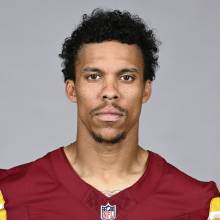 Chris Moore60Grade
Chris Moore started eight games for the Washington Commanders in 2025. He caught 11 of his 23 targets for 207 yards and one touchdown. Moore averaged over 18 yards per reception with over 14 air yards per target. He was good against zone coverages and finding voids in the defense. The 33-year old was a sufficient player who is a replacement level start and solid backup receiver for depth.
123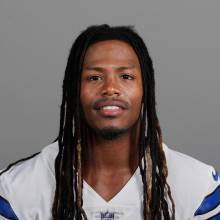 KaVontae Turpin60Grade
KaVontae Turpin serves as the primary return specialist for the Dallas Cowboys while rotating in on offense. His speed and quickness allow him to flip field position as a returner at any moment. He averaged 26 yards per kick and 5.5 yards per punt return. On offense, he is the primary motion pre-snap and will take the top off the defense for vertical shots from the slot. Turpin takes hands off out of the backfield and on WR reverses. He isn't WR1, WR2, or WR3, but he has a clear role and excels in it.
122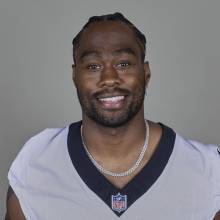 Brandin Cooks60Grade
Brandin Cooks started five games last season between the New Orleans Saints and the Buffalo Bills. He caught 24 of 36 targets for 279 yards and zero touchdowns. Cooks showed he is capable of making plays and of running vertically past defenders with his top-end speed. He ran solid routes and used his speed to create space on in-breaking and out-breaking routes. He does not offer a robust YAC ability, but he's a wily veteran who can help a receiver room and play at a functional level.
121 Van Jefferson60Grade
Van Jefferson is a capable veteran who can be an asset in a wide receiver room. He is a solid depth option who can win against zone defenses and paces his routes well to allow a void in the coverage to open up. He is not a great athlete and struggles to quickly uncover against man coverage. A veteran with good football IQ is a quality roster spot filled.
120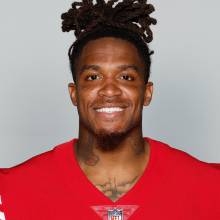 Demarcus Robinson60Grade
Demarcus Robinson is an established, capable veteran wide receiver. He comfortably fills the WR3/4 role and offers instinctive route-running. Robinson thrives working in the middle of the field on dagger concepts and deep in-breaking routes. As a result, he fit the 49ers' system well, being fearless between the hashes and running routes in sync with their quarterbacks. He doesn't offer much after the catch or winning the vertical plane, but he's a steady eddy veteran.
119 Nick Westbrook-Ikhine60Grade
Nick Westbrook-Ikhine is a reliable and consistent veteran wide receiver. He is a safe floor, low-ceiling asset to an NFL passing offense. Westbrook-Ikhine is a patient route-runner adept at finding voids in defensive shells. He is a pure possession receiver at 6'3 ", 215 pounds, and aligns equally outside and in the slot. Westbrook-Ikhine thrives as the underneath receiver in the passing concepts, hitches, slants, crossers, and out-breaking routes are in his lane as a route-runner. He is best suited to be the offense's backup for quality depth.
118 David Sills V61Grade
David Sills V is a smart and tough veteran wide receiver. He plays multiple positions within the offense and displays good football IQ. Sills is a tough route-runner who fights well through mid-stem contact. He is best utilized in the short and intermediate areas of the field, which helps mask his limited vertical speed and the need to create after the catch. He's a replacement-level starter but can be a solid backup.
117 Isaiah Bond61Grade
Bond opened up the Browns' explosive passing offense. His speed was an asset to Cleveland, keeping defenses honest with vertical routes and in the short game on manufactured touches. Bond's speed opens space for him as a route-runner, where he also found success. He was productive in a limited role with only 44 targets. He is nearly non-existent in the run game as a blocker. Bond served more as a decoy running corners out of the action.
116 Tory Horton61Grade
Tory Horton flashed big playmaking ability as a rookie for the Seattle Seahawks. He adds speed and deep-ball elements to this offense that complement the Seahawks top receivers. Horton is an adequate route-runner with room to develop. He was schemed open by the OC last season. The former fifth-round pick has the talent to be the WR2 or WR3 alongside JSN and Rashid Shaheed. Horton is a talented athlete with starting upside.
115 Jordan Whittington61Grade
Over the last two seasons, Jordan Whittington has not put up eye-popping numbers. That said, he's been a functional WR3 for the Rams offense. He has reliable hands at the catch point and takes advantage of single coverage or soft zone defenses. Whittington is a willing blocker and capable of making plays after the catch. He doesn't wow anyone athletically, but he gets the job done for the role he serves.
114 Zay Jones61Grade
Zay Jones is an established veteran wide receiver with adequate abilities to impact the offense's productivity. He displayed the long stride to win vertically down the field. Jones does not drop many passes. As a route-runner, he runs with maximum effort and speed to step on the defensive back's toes and break free at the apex of his route. Jones is 31 years old and can be a depth receiver or an emergency starter when injuries occur.
113 Darnell Mooney61Grade
Darnell Mooney is an established speedster who excels at his role of taking the top off the defense. He was second on the Falcons in air yards per target at 14.2. He is an above-average route-runner who can create space for his quarterback. He's a WR3 or role-specific player. Mooney's impact is limited when asked to defeat press coverage. Patient corners were able to take the air out of his reps with tight coverage, forcing contested catches or off-target passes. Mooney's hands were unreliable with consistent drops last season. He's a functional role player.
112 Mack Hollins61Grade
Mack Hollins is the kind of player who becomes an underrated asset to the wide receiver room and overall offense. He is a self-starter and plays with a high motor. Hollins has a role, and he thrives in it. He gives full effort as a perimeter blocker in the run game and assists in doubling edge defenders when aligned tight to the formation. He has big hands resembling a catcher's mitt, and he plucks everything out of the air. He didn't have a drop in 2025. Not a world-beating talent, but a culture-setting player and big-body, reliable receiving threat.
111 Devontez Walker62Grade
Devontez Walker received a limited snap-share in his second season in the NFL. When the Ravens needed a big, explosive play, they called his number. Again, the snap counts were small, but he averaged 22.7 yards per catch and 25.6 air yards per target. Walker has elite top-end speed to take the top of the defense and uses that speed as a route-runner to force defensive backs to commit. He needs a more expansive role to fully realize his ceiling.
110 Dyami Brown62Grade
Dyami Brown has never been a high-volume or highly productive wide receiver in the NFL. He served as a role-specific player as the offense's downfield threat. In limited targets, Brown showed his ability to win in the short and intermediate, especially against zone coverages. He flashed the IQ to find voids and be available with good timing for Trevor Lawrence. He has the talent to be an adequate starter in a good offense with a solid target share.
109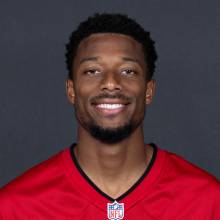 Tez Johnson62Grade
Tez Johnson's rookie season gave the Buccaneers' fan base flashes of what he offers in the passing game. He had a nice stretch of five consecutive games in which he accounted for 40 or more receiving yards and four total receiving touchdowns. Johnson's short-area quickness and route running were on display as a viable option for Baker Mayfield. He's an adequate starter and rotational starter. Despite the talent in their receiving room, Johnson proved he should be a solid fixture on the field, rotating with the starters.
108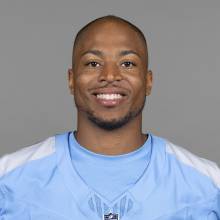 Tyler Lockett62Grade
Tyler Lockett remains a savvy veteran wide receiver capable of getting open quickly. At 33-years old, he is a capable chain mover out of the slot. Lockett lives in the short areas of the defense (10 yards or under) with his football IQ and coverage diagnosing. He is a functional backup with a level of reliability as a pass catcher to step into the lineup as a spot starter. Lockett offers very little after the catch and struggled to consistently defeat press coverage last season. He's on the back nine of his career, but continues to be an adequate asset.
107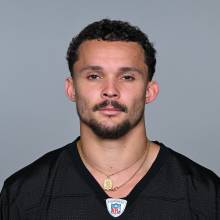 Roman Wilson63Grade
Roman Wilson's NFL career was hampered by multiple injuries, placing him behind the eight-ball heading into his second season in the league. He showed signs of being a potentially productive player in 2025. Wilson found soft spots against zones and detached from coverage to work into open space when the quarterback scrambled. In addition to being sure-handed and not dropping any passes. Wilson's stats will not jump off the page, but he flashed enough to envision him carving out a role in this new offense.
106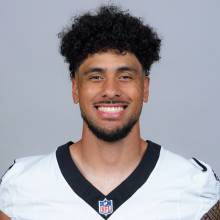 Devaughn Vele63Grade
The 28-year old wide receiver is a functional starting wide receiver. He excels working against zone defenses where his football IQ and instincts can take over. Devaughn Vele is a big-body receiver with inside/outside versatility. He makes incredible grabs displaying his body control and ability to contort mid-air to bring the ball in. He is an older player entering his third season in the NFL with a limited athletic upside. He's functional and a solid contributor, overall, his production and impact can be replaced by younger more talented receivers.
105 John Metchie III63Grade
John Metchie is a rhythm-and-timing route-runner who plays with tempo and patience to find his spots. He excels in underneath passing concepts where the quarterback wants to get the ball out of his hands quickly. Whether he's running, OTB, hitches, options, or spot route concepts, Metchie gets open underneath the defensive coverage. He is a limited athlete and lacks the ideal size/catch radius to be a consistent threat on the perimeter. He's battle-tested after recovering from a late college ACL tear and overcoming Leukemia before his NFL career began. He could be the slot receiver the Panthers need for Bryce Young.
104 Calvin Austin III63Grade
Calvin Austin is an undersized, fast, and quick-twitch wide receiver. He plays equal snaps outside and in the slot with adequate production. Austin settles into zone coverages well and has the speed to win foot races on deep passes. He doesn't offer much in contested catch situations with his smaller frame and wingspan. He can fill a specific role but is not a high-quality starting option for a team.
103 Jahan Dotson63Grade
Jahan Dotson is a quick mover with the route-running skill set to win against different coverages. He is best suited to attack defenses from the slot, where he has more room to work and eliminates the ability of corners to reroute him effectively in press coverage. Dotson can stop and start, beating defenders with double moves vertically and horizontally. He is a smaller-framed receiver with a limited catch radius. He's a functional starting receiver who can complement a true WR1.
102 Treylon Burks63Grade
Treylon Burks had a positive showing for the Washington Commanders' passing attack last season. He was one of their most reliable pass catchers with zero drops on the season. Burks is still 6'2, 225 pounds, and he showed that against corners that weren't a physical match for him. Only accounted for 130 yards and one touchdown on 22 targets, but he ran 149 routes, and there's more gas in the tank for this young receiver. He should be competing for more involvement in their offense this coming season.
101 Tyquan Thornton63Grade
Tyquan Thornton helped revive the Chiefs' deep passing game to an extent in 2025. He led the NFL with 26.3 air yards per target last season and ran vertical routes 70.4% of his routes, per NFL Next Gen Stats. Thornton and Mahomes were able to hook up at times for chunk plays. He used the threat of his speed to win on underneath routes against off-coverage. Thornton struggled with detaching from physical press coverage and handsy corners in the contact window. He offered very little after the catch, and if the deep ball was limited, so was his impact. He's an adequate starting and role-specific wide receiver.
100 Kayshon Boutte63Grade
Kayshon Boutte has been a consistent 500-plus-yard receiver over the last two seasons. He led the Patriots receivers in air yards per target with 17.4. Boutte is a physical route-runner and does not shy away from contact from opposing corners. He embraces the hand fighting and jostling for position as the ball descends. He has good play strength to fend off handsy corners and make plays through contact at the catch point. Boutte is not a great or explosive athlete. He has spurts of difficulty separating from tight-man coverage and relies on contested catches. Overall, a solid starting receiver with a capped physical ceiling.
99 Keon Coleman64Grade
Keon Coleman began the season with a hot start against the Baltimore Ravens. He caught eight passes for 112 yards and a touchdown. Unfortunately, Coleman's maturity and decision-making derailed his season. He never sniffed 100 yards in a game after his first game of the season. Coleman is a possession receiver with outstanding leaping ability and ball skills to win downfield. Mastering route running will increase his ability to separate with his limited top-end speed.
98 Luke McCaffrey64Grade
Luke McCaffrey is an intelligent and instinctive wide receiver. He was limited to seven games last season after suffering a fractured collarbone in early November. McCaffrey's production was modest during those seven games. He shows the IQ needed to get open quickly underneath and reading/reacting to zone coverages post-snap. His game is built on route running and patience. Athletically, he will not overwhelm opposing defenders. He struggles to separate vertically against tight man coverage. McCaffrey hasn't produced to the level that would give Commanders' fans optimism about his future, yet.
97 Elijah Moore64Grade
Elijah Moore is a former second-round pick who has not lived up to that draft slot. He is known as an athletic slot receiver with yards-after-catch ability. Moore will create explosives out of the slot, working vertically and horizontally on deep routes. He's shown above-average ball tracking on those deeper targets. He's a solid player with a smaller frame and catch radius, but if used properly, he can make a couple of plays a game.
96 Sterling Shepard64Grade
Injuries opened up a pathway for Sterling Shepard to start multiple games and to receive more targets than anyone would've anticipated. He caught 32 receptions for 371 yards and one touchdown. Shepard proved he can still play at 32 years old and not be a liability. He ran crisp routes and created after the catch, showcasing his value as a solid backup/depth veteran receiver. In a pinch, he can step into the lineup and keep things afloat.
95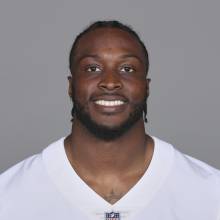 Ryan Flournoy64Grade
Ryan Flournoy isn't an elite physical specimen or athlete, but he understands how to play wide receiver effectively. He shows the ability to get open against different coverages and to process quickly post-snap to sit his route when given free releases. Flournoy has incredibly reliable hands and rarely drops the football. He didn't combat physical press coverage well or counter it with top-end speed. Flournoy is a solid starting WR3 who can take advantage of favorable matchups.
94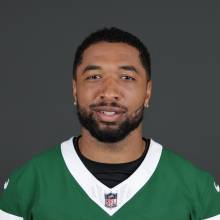 Tim Patrick64Grade
Tim Patrick may not be a bell-to-bell starter for an entire season, but the veteran wide receiver has value. He showed in a few instances with Jacksonville last season that he is still a big, physical receiver with a little short-area quickness. The soon-to-be 33-year-old pass catcher can bring good value to a younger wide receiver room. If thrown into the lineup, he can quickly become one of the quarterback's trusted receivers.
93 Dontayvion Wicks64Grade
Dontayvion Wicks is a solid depth piece and rotational wide receiver. He displayed the football IQ to attack zone coverages. Wicks has never been a go-to or highly productive receiver during his stint with the Green Bay Packers. He will bring strength and grit to the Philadelphia Eagles' offense at the catch point. Wicks lacks high-quality physical traits and struggles to get open against tight man coverage downfield. Overall, he's an adequate role player, best suited as a WR3.
92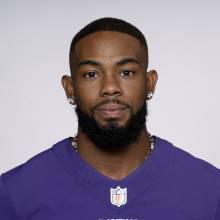 Rashod Bateman64Grade
Rashod Bateman has been a solid player for the Baltimore Ravens offense. However, that is not enough for the first-round draft capital spent on him a few years ago. Bateman is an effective route-runner with good technique in man coverage situations. Due to injuries that have limited his playing time earlier in his career, Bateman does not display the same quickness or athletic pop as a draft prospect. He has battled drops throughout his career and reliability has not shown up for consistent productivity with a star quarterback at the helm.