91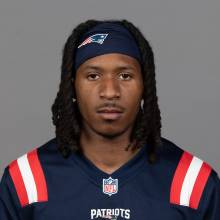 Kyle Williams65Grade
Rookie wide receiver Kyle Williams made his share of plays with only 21 targets on the season. He made plays for the Patriots offense, running after the catch or using his speed before the catch for separation. Williams averaged 21 yards per catch on 17.4 air yards per target. The rookie wideout is explosive with strong acceleration after the catch to put the defense in a bind. He finished with 10 catches for 209 yards and three touchdowns. Not sure if he'll receive a much larger amount of snaps or targets, but he can fill the role of primary kick returner, WR3/4, and the downfield threat in the Patriots' passing attack.
90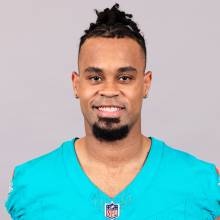 Jalen Tolbert65Grade
Jalen Tolbert is coming off a subpar statistical season for the Cowboys. He started eight games but only caught 18 passes for 203 yards and a touchdown. He's athletic and patient in attacking the defense. Typically a strong-handed wide receiver who rarely drops passes. Tolbert was never going to receive a bulk of the target share with George Pickens and CeeDee Lamb on the roster. Tolbert is an expected starter for the Miami Dolphins in 2026. He's an adequate receiver with good physical tools.
89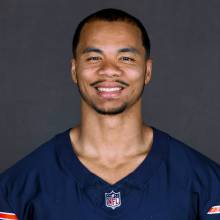 Kalif Raymond65Grade
Kalif Raymond is a proven, quality veteran wide receiver to have on the depth chart. He serves as a punt returner on special teams and has averaged 10 or more yards per return over his career. Raymond operated as an underneath, quick-passing game receiver. He understands spacing and reading spot droppers leverage post snap. His returner background helps him create yards after the catch. The 31-year-old is a safe but useful asset, with rotational value as a slot receiver and as a returner.
88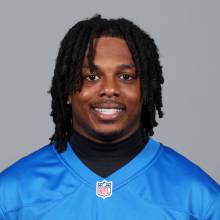 Greg Dortch65Grade
Greg Dortch was not relied on consistently in the Cardinals' passing attack last season, but he made plays when called on. He has established a role as a return specialist, averaging 26 and 11.6 yards per kick and punt returns. He is a fun and elusive playmaker in space. Dortch primarily plays from the slot but also aligns in the backfield, replacing the halfback in the passing game. The Detroit Lions will benefit from his special teams value alone, but if called on for offensive snaps, Dortch can make impactful plays.
87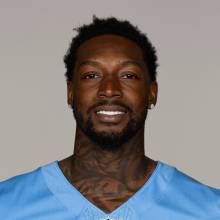 Calvin Ridley65Grade
Calvin Ridley is a part of an average supporting cast the Titans built to help rookie quarterback Cam Ward. Ridley established himself as a reliable starting receiver with the most knowledge and the best route-running in the Titans' room. He is a savvy veteran who understands how to get open against man and zone defenses. Ridley isn't a bad athlete, but he has lost a step in speed and explosiveness. When facing press coverage, his routes are at risk of being quickly capped by physical contact, disrupting the timing of his route and the quarterback's drop.
86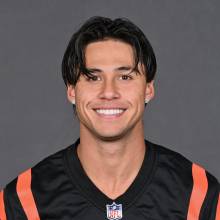 Andrei Iosivas65Grade
Andrei Iosivas is the third of the Cincinnati Bengals talented trio of pass catchers. The former Princeton playmaker is a steady wide receiver who understands and plays his role well. Iosivas presents a prototypical X-receiver frame and athleticism, but aligns across the Bengals' offensive formation. He has the football IQ to execute the game plan from multiple receiver alignments. Iosivas is not the crispest or smoothest route-runner. He will be rerouted by physical press coverage. He possesses great leaping ability, ball skills, and high-point passes downfield. He's a solid, contributing receiver when paired with WR1.
85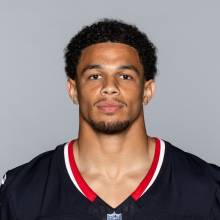 Jaylin Noel65Grade
Jaylin Noel is a versatile wide receiver for the Houston Texans. He works primarily from the slot but can handle manufactured touches. Noel is a strong kick and punt returner; his vision and ability to follow blocks show up on quick screens and backfield touches. He displayed the touch necessary to work in high-traffic areas with high concentration, bringing in passes despite bodies surrounding him. There are a lot of mouths to feed in that Texans' receiver room but Noel deserves a bigger piece of the target share pie.
84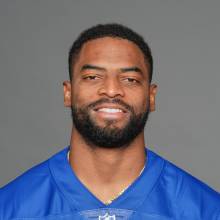 Darius Slayton65Grade
Darius Slayton is a proven veteran receiver with consistent, solid production. He's served as the Giants' X-receiver and deep-ball threat, making the most of his speed. He runs effective routes against man and finds holes in the zone defenses. Slayton has battled drops throughout his career. He's an adequate starting receiver with an established floor.
83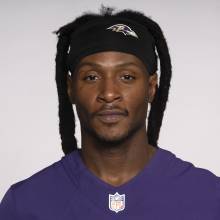 DeAndre Hopkins65Grade
DeAndre Hopkins is not the same elite caliber wide receiver at this stage of his career. Yet, he still owns a pair of the best hands in football. Hopkins creates less separation than before but if the ball is thrown in his vicinity, he plucks it out of the air. He tracks the ball at a high level and attacks it with great patience, timing, and aggressiveness. Athletically, he's taken a step or two back limiting his ability to beat corners vertically. Overall, he's a functional receiver and starter who can serve as a security blanket and chain mover.
82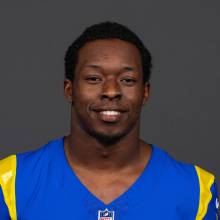 Xavier Smith66Grade
Xavier Smith serves as the Los Angeles Rams' primary kick and punt returner. He is a valuable special teamer helping the offense with favorable returns. Smith is a reliable backup wide receiver who makes the most out of his targets. He created chunk plays down the field as the WR3 in the offense. Smith was efficient reeling in 18 of his 24 targets for 303 yards. Potentially, he could have a bigger impact if his offensive role is expanded.
81 Isaac TeSlaa66Grade
Isaac TeSlaa was not heavily targeted in the Detroit Lions passing offense last season but he made the most of his targets. He caught 16 of his 27 targets for 239 yards and six touchdowns. TeSlaa made his mark as a big body target with a strong catch radius and ball skills. He didn't drop a pass as a rookie, albeit on a small sample size of targets. He adds a missing dimension to the Lions' passing game as the receiver built to play the traditional X-receiver and possession receiver role. Excited to see how he develops and performs in 2026.
80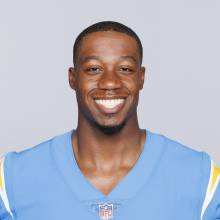 Josh Palmer66Grade
Josh Palmer's 2025 season was limited to 12 games after he sustained an ankle injury in Week Six. He is a veteran wide receiver with the ability to win downfield. In one-on-one situations, he showed solid route tempo and separation ability. Palmer still possesses the leaping ability to box out defenders and high-point the football downfield. He's an average receiver and depth playmaker to have on the roster.
79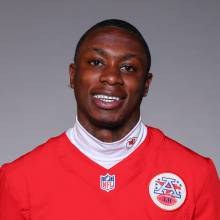 Xavier Worthy66Grade
Xavier Worthy has elite top-end speed, being the fastest man in NFL Combine history. He has flashed separation-creation with his route-running ability. Worthy lacks consistency running through the catch point. His chemistry with Mahomes needs to improve on deep passing concepts to unlock his full potential.
78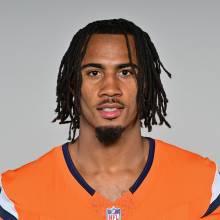 Pat Bryant67Grade
Pat Bryant made a positive impact on the Denver Broncos' offense overall during his rookie campaign. He displayed a growing connection with quarterback Bo Nix, maintaining a healthy focus on when he broke contain and started a scramble drill. Bryant worked back to his signal caller for easier receptions. He blocked well in the run game using his frame and strength to seal defensive backs. Bryant filled the "power/big-slot" role well in Coach Payton's offense. He lacks elite acceleration and top-end speed, which makes him more of a functional starter than a high-ceiling player.
77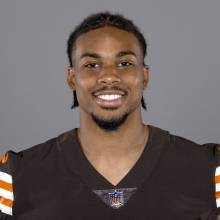 Cedric Tillman67Grade
Cedric Tillman is an adequate starting wide receiver. He has the size and strength to excel as a possession receiver on the perimeter or as a power slot. Tillman is a solid route-runner at his size and is good at attacking zone defenses. He catches the ball with strong hands and away from his frame. Tillman is not a great athlete in terms of explosiveness and top-end speed to stretch the field. Additionally, he has never played a full season in his three-year career. He's been snake bitten by injuries; if he can stay healthy, he's a net-positive pass catcher and player.
76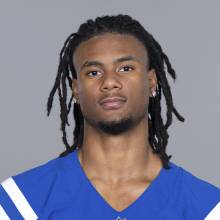 Adonai Mitchell67Grade
Adonai Mitchell is one of the league's more athletically gifted wide receivers. He checks the boxes for what number-one receivers possess. Mitchell has the height, weight, and speed to be an offense's primary X receiver. He is a smooth and fluid mover with a strong route-running skill set. Mitchell can play multiple receiver positions. The issue is, he has yet to play to the level of his raw talent. From drops, mental lapses, and overall inconsistency, Mitchell may have a high ceiling, but the floor isn't safe.
75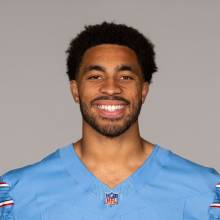 Chimere Dike67Grade
Chimere Dike serves as the Titans' primary punter return specialist. He averaged 17.3 yards per return and two return touchdowns. Dike has field-flipping speed and displays it on special teams and as a wide receiver. He handled reading zone coverages well as a rookie and gaining yards after the catch. There will be an uphill climb to fight for targets with the talent pool in their receiver room but he has a defined role carved out on special teams.
74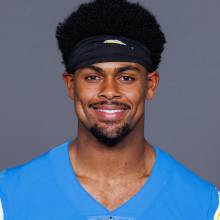 Tre' Harris68Grade
One of Tre' Harris' calling cards as a prospect was his route running and separation skills against man coverage. As a rookie, he showcased that ability translated to the NFL well. Harris showed his value against zone defenses and solid chemistry with Justin Herbert. He utilized his size and strength wisely to combat tight man coverage defenders and box them out of the catch point. His lack of explosive athletic traits could limit his max potential. Harris is fighting for targets with multiple talented players but if given the opportunity, he can produce in the Chargers' offense.
73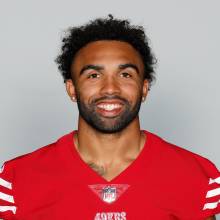 Christian Kirk68Grade
Christian Kirk battled a nagging hamstring injury that forced him to miss a few games last season for the Texans. On the field, Kirk displayed his ability to play all over the formation, win with his route running, and show good football IQ. He is a good addition to a receiving room, if healthy. Kirk doesn't have the same athleticism as he did at the earlier stages of his career, but he is still capable of winning after the catch. He is a quality veteran receiver who can help push the passing offense along in his role, working in the short and intermediate parts of the field.
72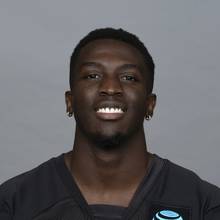 Olamide Zaccheaus68Grade
Olamide Zaccheaus excels on underneath/short passing routes where he attacks open spaces and gains yards after the catch. He has a compact frame with good football IQ post-snap to locate vulnerabilities within the defensive secondary. Zaccheus is a quality playmaker suited to be a good WR3 for an offense. He should benefit the Atlanta Falcons offense.
71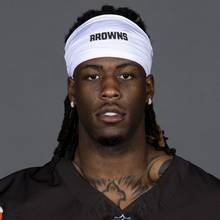 Jerry Jeudy68Grade
Jerry Jeudy finished second on the Browns in targets and receiving yards. He wins with route running and creating separation. Jeudy uses short-area quickness and leverage to win his reps against man coverage. He still has the open-field speed to catch and run if thrown into a void. Jeudy continues to struggle with drops and making tightly contested catches. After six years in the league, he has established himself as a functional starting receiver and contributor but very inconsistent.
70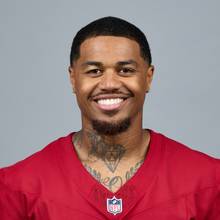 Kendrick Bourne69Grade
Kendrick Bourne savvy veteran wide receiver with strong instincts and football IQ. He thrives as a No. 3 receiver and chain mover in the passing offense. Bourne's play style is that of a route-running slot receiver. He locates the soft spots against zone defenses quickly and is ready for the ball. Bourne understands how to play the receiver position and make an impact as a first and second-level threat. He is not a great athlete in terms of speed and explosiveness, and that's not how he wins. He is not a high-volume receiver who will or should dominate targets, but as the third receiver on the depth chart, Bourne stabilizes your receiver room.
69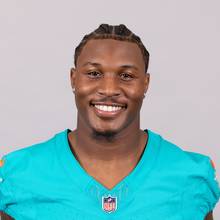 Malik Washington69Grade
Malik Washington served as a manufactured touch wide receiver on offense and a dynamic returner on special teams for the Miami Dolphins last season. He is alignment versatile which made it easy to get him the football in space on WR screens, angle routes out of the backfield, etc. Washington is quick and explosive with good contact balance for an undersized receiver. He's shown good change of direction and route running. On special teams, he averaged over 26 yards per kick return, 13 yards per punt return, and one punt return touchdown. Going into the 2026 season and under a new regime, will he be asked to play a traditional receiver role or more of the same? As of right now, he's an adequate starter with more to prove.
68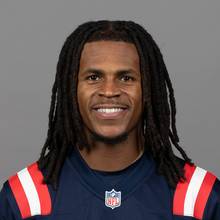 DeMario Douglas69Grade
DeMario Douglas is a proven and solid starting wide receiver. He's an established route-runner and separator, making himself available quickly. Douglas possesses the speed to serve as a vertical slot receiver on deeper routes. He turns into a playmaker after the catch, gaining positive yards. Douglas is an asset when utilized, despite not being the WR1 of the passing offense.
67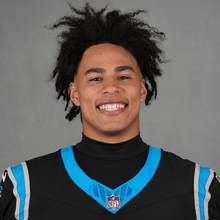 Jalen Coker69Grade
Jalen Coker is a reliable pass catcher when he's on the field. The UDFA for Carolina has proven to be one of their best route-runners and has the best pair of hands in the receiving room. A preseason injury cost him the first month or so of the season. Coker is a strong, high-floor receiver with inside/outside versatility and showed up big late in the season and in the playoff loss against the Rams.